
 Available in US
The Ashes Betting Strategies: England vs Australia

Cricket produces plenty of compelling rivalries, but none carry the weight of England versus Australia in Test cricket. The Ashes transcends normal sporting competition in ways that affect everything from player psychology to betting market dynamics. When these two nations meet, historical baggage influences team selection, media pressure amplifies every session, and betting volumes dwarf any other Test series. For punters, this combination of intensity and liquidity creates opportunities that don’t exist elsewhere in cricket betting.
The challenge with Ashes betting lies in separating genuine analytical insight from the noise that surrounds these matches. Everyone has opinions about England versus Australia. Pundits fill endless column inches with predictions, former players offer their assessments, and casual fans who barely watch cricket suddenly develop strong views about series outcomes. This noise can either help or hurt your betting depending on whether you’re adding to it or cutting through it to find genuine value.
What makes Ashes betting genuinely different from other Test cricket isn’t just the rivalry’s intensity. It’s the combination of factors that create unique market dynamics. Home advantage matters more than in almost any other series. Player records against specific opponents carry unusual predictive weight. Historical patterns at particular venues persist across decades. And public betting patterns, driven by nationalism rather than analysis, systematically misprice certain outcomes. Understanding these dynamics transforms Ashes betting from patriotic gambling into strategic opportunity.
Once you understand the historical context of this rivalry, you can maximize your returns by applying advanced cricket value betting strategies throughout the series.
The Historical Patterns That Shape Modern Odds
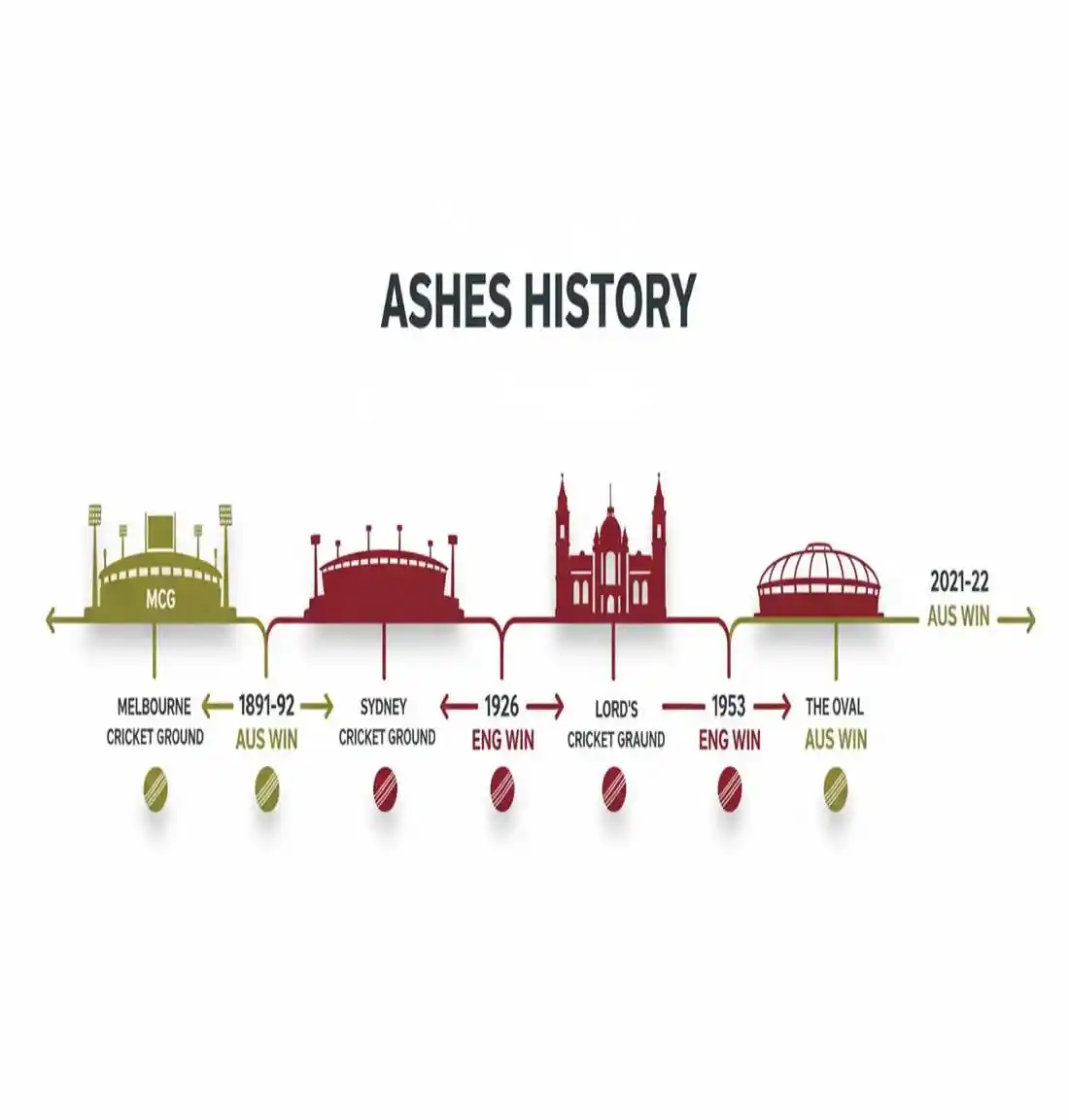
The Ashes alternates between England and Australia every two years, with the touring side facing conditions dramatically different from home. This alternation creates patterns that experienced bettors recognise and exploit. Australia haven’t lost an Ashes series at home since 2010-11, a drought that reflects genuine advantages rather than coincidence. English conditions favour swing bowling that Australian batsmen traditionally struggle against, while Australian pitches offer pace and bounce that challenge English techniques developed on slower surfaces.
These home advantages aren’t absolute, but they’re significant enough to influence series pricing substantially. Bookmakers know that England are heavy underdogs when touring Australia, and they price accordingly. The question for bettors isn’t whether home advantage exists but whether markets accurately reflect its magnitude. Sometimes Australian home advantage is overpriced because recent English defeats have made punters overly pessimistic. Other times it’s underpriced because English optimism ignores structural disadvantages that persist regardless of current form.
England’s record in Australia makes sobering reading for anyone considering backing them away from home. Their 2010-11 series victory remains the only away Ashes win this century, and that success required an exceptional confluence of factors including Australian batting collapses, English bowling excellence, and conditions that happened to suit the touring side’s strengths. Subsequent tours have produced heavy defeats regardless of how well England performed in home series immediately before travelling.
This historical pattern doesn’t mean backing England in Australia is always wrong. It means the odds need to compensate for demonstrated difficulty. If England are priced at 3.00 for an away series, you need to believe they have better than 33% chance of winning. Given their historical struggles, that’s a high bar. The value calculation changes if odds drift to 4.00 or 5.00, where smaller win probabilities can still represent betting value.
England’s home advantage is real but less overwhelming than Australia’s. The 2023 Ashes finished 2-2, with Australia retaining the urn they’d held since 2017 despite playing in conditions that theoretically favoured England. Australian teams have won home series for England three times since 2000, demonstrating that talent gaps can overcome English conditions when the visitors possess sufficient quality. Backing Australia in England isn’t the automatic loser that backing England in Australia often becomes.
The drawn series outcome deserves attention in Ashes betting. A 2-2 result leaves the urn with its current holder, meaning draws benefit Australia when they arrive in England already holding the trophy. This asymmetry affects series winner markets because Australian draws count as successful defence while English draws represent failure to reclaim what they’ve lost. Markets don’t always fully price this asymmetry, creating occasional value on drawn series outcomes.
Series Winner Markets and Timing Strategy

Ashes series winner markets open months before the first ball, and early betting captures value that often disappears as series approach. Odds movements between market opening and series start reflect team news, form fluctuations, and public money flows that don’t always represent genuine probability changes. Understanding these dynamics helps you decide when to bet and whether early or late entry offers better value.
Early series betting locks in odds before information that will ultimately influence outcomes becomes available. You don’t know who’ll be injured, who’ll be in form, or what conditions will prevail at specific venues. This uncertainty cuts both ways. Sometimes you capture value that evaporates once information confirms your assessment. Other times you back teams at prices that worsen once negative information emerges. The expected value calculation depends on whether you believe early markets systematically misprice outcomes in predictable directions.
Public money typically flows toward England in home series and Australia in Australian series, reflecting nationalist betting patterns rather than analytical assessment. This public bias creates potential value on the opposing side if you believe markets overadjust for expected money flows. Backing Australia early for English series, or England early for Australian series, can capture odds that shorten once public money arrives. The risk is that early odds already reflect expected public patterns, meaning you’re not actually capturing any edge.
Team news during the buildup period affects series winner markets significantly. Injuries to key players, particularly fast bowlers who break down frequently, can transform series prospects. Pat Cummins missing matches changes Australia’s bowling attack fundamentally. James Anderson’s fitness affects England’s swing bowling threat. Monitoring injury news and betting before markets fully adjust to developments provides edges, but requires genuine information advantages rather than just reacting to headlines that bookmakers have already incorporated.
The first Test result creates massive series winner market movements that sometimes represent overreactions. A team winning the opening match sees their series odds shorten dramatically, often beyond what single-match results justify. If England win the first Test of a home series, their series odds might halve despite four matches remaining. This creates potential value on the losing side if you believe the market overreacted to early results. The risk is that first Test results genuinely predict series outcomes better than naive analysis suggests, meaning apparent overreactions are actually appropriate adjustments.
Laying strategies work particularly well in Ashes betting because strong favourites often face enough variance across five Tests that their short odds represent poor value. If Australia are 1.40 favourites for an away series, they need to win roughly 71% of the time to justify that price. Historical data suggests even dominant teams don’t win away Ashes series that frequently. Laying heavy favourites and accepting exposure to less likely outcomes can provide systematic edges when favouritism becomes excessive.
Individual Test Betting Approaches

While series markets attract the most attention, individual Test betting often provides better value because you’re assessing single matches rather than cumulative five-match probabilities. Your analysis can focus on specific conditions, current form, and lineup decisions rather than trying to predict how multiple variables will compound across an entire series.
Each Ashes Test presents distinct analytical challenges based on venue characteristics, match timing within the series, and situational factors that influence team approaches. The first Test carries unique pressure as teams establish early momentum. Middle Tests might see lineup experimentation as selectors react to early results. Final Tests with series already decided produce different dynamics than winner-take-all deciders.
Venue analysis becomes paramount for individual Test betting. Australian grounds each present distinct characteristics that favour different playing styles and betting approaches. Perth’s pace and bounce traditionally assist fast bowlers, suggesting lower totals and backing quick bowlers in individual markets. Brisbane’s Gabba has been an Australian fortress where English teams arrive jet-lagged and depart defeated. Adelaide’s day-night Test with the pink ball creates unique conditions that affect both match winner and totals markets.
English venues offer their own distinct characters that influence individual Test betting. Lord’s slope famously assists left-arm seamers bowling from the Pavilion End. Headingley’s seamer-friendly conditions have produced famous low-scoring matches including Ben Stokes’ miraculous 2019 Ashes innings. Edgbaston’s passionate crowds create genuine home advantage that’s difficult to quantify but absolutely real. The Oval typically produces the highest-scoring matches in England, pushing totals markets higher.
Current form matters more for individual Tests than series betting because you’re assessing immediate performance likelihood rather than sustained excellence across months. A batsman struggling through a form slump might be worth opposing in top batsman markets for the next Test even if their career record suggests long-term quality. Similarly, a bowler hitting peak form might offer value at odds reflecting career averages rather than current excellence.
Draw markets for individual Tests require careful conditions assessment. Weather forecasts obviously matter, but so do pitch characteristics and likely match pace. Tests where both teams bat slowly tend toward draws regardless of weather. Tests on deteriorating pitches that make fourth innings batting treacherous tend toward results. High-scoring first innings that consume substantial match time increase draw probability by reducing the overs available for forcing results.
Player Markets in Ashes Context

The Ashes creates player market dynamics that differ from regular Test cricket. Certain players have exceptional records in this specific rivalry that exceed their overall career statistics. Others consistently underperform against the traditional enemy despite excellence elsewhere. These patterns provide edges when bookmaker pricing reflects general ability rather than Ashes-specific performance.
Joe Root’s Ashes record demonstrates remarkable consistency that his overall statistics somewhat obscure. He performs in this series, scoring runs when other England batsmen struggle, maintaining technique when pressure intensifies, and producing innings that match situations demand. Backing Root in top batsman markets for Ashes Tests isn’t clever or contrarian, but his reliability creates lower-variance opportunities that suit certain betting approaches.
Steve Smith’s Ashes statistics border on absurd, with multiple series where he’s averaged over 100 runs per innings. His technique, built around unorthodox movements that frustrate bowlers, seems particularly effective against English attacks. However, his dominance is fully reflected in market pricing, meaning backing Smith often means accepting short odds that offer limited value despite high probability of success. The betting question isn’t whether Smith will score runs but whether his odds adequately compensate for the certainty everyone expects.
English fast bowlers have historically excelled in home Ashes conditions, with swing bowling exploiting Australian batting techniques developed on bouncier pitches. James Anderson’s Ashes record at English venues shows sustained excellence against opposition batsmen who struggle with lateral movement. Backing English seamers in top bowler markets during home series often provides value because Australian batting weaknesses against swing are underpriced by markets focusing on their overall quality.
Australian pace bowlers face different challenges in English conditions but have proven capable of adapting. Mitchell Starc’s left-arm angle creates problems regardless of conditions, while Pat Cummins’ relentless accuracy and subtle movement extract wickets anywhere. Their effectiveness in English conditions varies more than at home, making player market analysis more important than simply backing proven performers.
All-rounders offer natural Ashes value because the series’ intensity produces situations where match-defining contributions can come from multiple disciplines. Ben Stokes’ 2019 Headingley innings remains the defining Ashes moment of recent decades, but his bowling has also produced crucial wickets in tight situations. Cameron Green’s emergence gives Australia similar flexibility. Man of the Match markets particularly reward all-rounders who can influence contests through batting, bowling, or both.
Live Betting During Ashes Tests
The Ashes intensity creates live betting opportunities that don’t exist in lower-profile Test cricket. Markets move more aggressively based on session results, creating potential overreactions that patient bettors can exploit. Public money flows during matches are larger and more sentiment-driven, meaning analytical approaches can find edges against emotional betting patterns.
Session transitions represent key live betting moments. The new ball becoming available transforms bowling prospects, often creating value on lower session totals or wicket-taking markets. Lunch and tea breaks allow reassessment of conditions and tactics, with markets sometimes slow to incorporate visible changes in pitch behaviour or weather patterns. The period immediately after breaks, when markets are still adjusting to new information, provides opportunities for those watching matches closely.
Weather interruptions during Ashes Tests create specific betting dynamics. Rain delays obviously increase draw probability, but markets sometimes overadjust or underadjust depending on how much play has been lost and what match situation existed before the interruption. A team batting well before rain might see their match winner odds drift excessively despite conditions likely remaining favourable when play resumes.
Momentum shifts happen more dramatically in Ashes cricket because the rivalry’s intensity amplifies normal match flow. A quick wicket burst doesn’t just improve bowling side prospects; it can trigger batting collapses as pressure compounds. England’s Bazball approach has increased volatility further, meaning session outcomes can swing matches more dramatically than in less aggressive Test cricket. Live markets sometimes lag behind these momentum shifts, providing windows for quick-reacting bettors.
The caution with Ashes live betting is that markets are also more efficient than in lower-profile cricket. More bookmaker attention, more betting volume, and more sophisticated punters all mean prices adjust faster to new information. The edges that exist require genuine analytical insight rather than simply watching matches and betting on what seems likely. If you’re not adding value beyond what everyone else watching can see, you’re not actually finding edges in live markets.
Practical Ashes Betting Framework

Converting Ashes analysis into practical betting strategy requires structured approaches rather than ad hoc reactions to matches as they unfold. Having frameworks for series betting, individual Test betting, and live betting ensures your analysis translates into appropriate market selections.
Series betting works best when you identify specific scenarios where markets misprice outcomes. If you believe Australia’s home advantage is overpriced because England’s current squad matches up better than recent touring parties, that’s a clear betting thesis. If you believe drawn series outcomes are underpriced because closely-matched teams often split series, that’s another clear thesis. Having specific reasons for bets, rather than general feelings about which team is better, produces more consistent long-term results.
Individual Test betting should focus on matches where your analysis provides clearest edges. You might have strong views about first Test outcomes based on preparation disparities and early-series dynamics. You might see value in specific venue matchups where conditions suit particular players or team styles. Concentrating bets on highest-conviction opportunities rather than betting every Test produces better returns than spreading stakes across matches where your edge is marginal.
Player markets in Ashes context require balancing reputation against circumstance. Stars will usually perform, but their odds reflect that expectation. Finding value means identifying situations where lesser names face favourable conditions, or where stars face challenges their odds don’t adequately reflect. Form analysis and matchup assessment matter more than simply backing the biggest names.
Bankroll management for Ashes betting should account for the series structure. Five Tests over several weeks provides multiple betting opportunities but also means extended exposure to variance. Sizing bets appropriately ensures you can sustain involvement throughout series rather than busting early and watching remaining matches without stake. Setting series-level staking limits prevents chasing losses across multiple Tests.
The Ashes will always attract more betting attention than other cricket series. The question is whether you’re adding to the noise or finding signal within it. Historical patterns, venue characteristics, player-specific records, and market dynamics all create opportunities for those approaching Ashes betting analytically rather than emotionally. The rivalry’s intensity makes everything more compelling, including the potential rewards for those who bet smart rather than simply bet patriotic.
Building Your Ashes Betting Edge
Developing genuine expertise in Ashes betting requires combining historical knowledge with current form assessment and market awareness. The punters who profit consistently from this series aren’t those with the strongest opinions about which team deserves to win. They’re those who identify specific situations where bookmaker pricing doesn’t match their probability assessment.
Start by understanding venue histories in detail. Each ground that hosts Ashes cricket has decades of data on scoring patterns, pitch behaviour, and team performance. Perth has produced certain types of matches, Brisbane others, and English venues each have their own characteristics. This historical data provides baselines for assessing whether current conditions deviate from expectations in ways that create betting value.
Track player performances against specific opposition rather than relying on career averages. Some batsmen have excellent overall records but struggle against Australian bowling specifically. Some bowlers dominate everywhere except against English batting lineups that match up well against their particular style. These opposition-specific patterns often provide better predictive value than general statistics because they capture matchup dynamics that persist across series.
Monitor conditions throughout series rather than assuming early-match patterns will persist. Australian pitches can change character as summer heat affects surfaces. English weather introduces variance that isn’t predictable at series start. Adjusting your analysis based on observed conditions rather than preconceptions produces more accurate assessments for later Tests.
Finally, maintain discipline about bet sizing and selection. The Ashes generates enormous betting temptation because matches feel important and opportunities seem abundant. Not every match provides genuine edges. Not every market offers value. The disciplined bettor focuses stakes on highest-conviction opportunities rather than betting every session of every match because the cricket is compelling. Entertainment and profit require different approaches, and confusing them leads to losses that reduce both.
The Ashes rewards patient, analytical bettors who resist emotional involvement while maintaining deep engagement with the cricket itself. The series will continue producing drama regardless of whether you bet on it. Your job is ensuring that when you do bet, you’re capturing genuine value rather than simply expressing hope about outcomes you’d like to see. That distinction between analytical betting and hopeful gambling defines whether Ashes involvement adds to your bankroll or depletes it over time. The most successful Ashes bettors are those who love the cricket deeply but bet on it dispassionately.
Stay updated with the latest team news and expert predictions on our premier platform for betting on England cricket.
